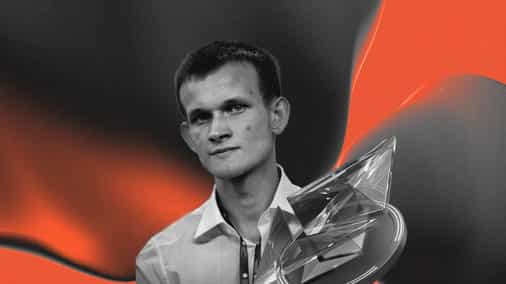
Ethereum founder Vitalik Buterin appears to have given up on the "rollup-centric" scaling model he previously championed, noting that Layer 2s have decentralized "far slower" than anticipated while the Ethereum base layer scaled.
"Both of these facts, for their own separate reasons, mean that the original vision of L2s and their role in Ethereum no longer makes sense, and we need a new path," Buterin said in an X post on Tuesday.
The message marks a significant reversal of Buterin's and the Ethereum Foundation's stated plan to scale the largest blockchain ecosystem using high-throughput and efficient "branded shards" that settle on the slower but theoretically uncensorable Ethereum base layer.
This "rollup-centric roadmap" was not always fully supported by the diverse Ethereum ecosystem, though scrutiny of the plan intensified last year when pressure from Solana, which targets a monolithic scaling model, reignited competition among Ethereum community members.
Following several shakeups at the Ethereum Foundation in 2025, Ethereum researchers redoubled efforts on scaling the Ethereum base layer while also pushing capacity for L2s, like expanding data accessibility through blob improvements like PeerDAS and other technical upgrades.
Decentralization framework
Buterin notes, however, that "L2s are not able or willing to satisfy the properties that a true ‘branded shard’ would require." He previously theorized a framework for measuring rollup decentralization that progresses through stages, from Stage 0, where a centralized trust council could override transactions, to Stage 2, representing full trustlessness.
Despite the dozens of L2s launched, very few have progressed to Stage 1, a point that Buterin has criticized in the past. Base, the L2 incubated by Coinbase beginning in 2023, advanced to Stage 1 last year by decentralizing the security council’s governance and launching permissionless fault proofs.
In addition to corporate interests that may have delayed the decentralization of L2s, Buterin notes there are also technical challenges and regulatory concerns. "I've even seen at least one explicitly saying that they may never want to go beyond stage 1, not just for technical reasons around ZK-EVM safety, but also because their customers' regulatory needs require them to have ultimate control," he said.
Room for L2s
Importantly, Buterin has not abandoned the concept of L2s altogether, but instead appears to widened his view of what they should aim to be.
"We should stop thinking about L2s as literally being ‘branded shards’ of Ethereum, with the social status and responsibilities that this entails," he said Tuesday. "Instead, we can think of L2s as being a full spectrum, which includes both chains backed by the full faith and credit of Ethereum with various unique properties (eg. not just EVM), as well as a whole array of options at different levels of connection to Ethereum, that each person (or bot) is free to care about or not care about depending on their needs."
Buterin notes that L2s should still advance to Stage 1 “at the minimum,” otherwise those networks should be viewed more as a competitive, vampiric “L1 with a bridge.” However, he argues teams should “identify a value add other than ‘scaling,’ including non-EVM specialized features/VMs around privacy, app-specific and “non-financial” architectures, or other technical advancements.
He also notes there is still room for L2s that provide “truly extreme levels of scaling that even a greatly expanded L1 will not do,” as well as other novel “ultra-low-latency and other sequencing properties.”
Notably, Buterin once again mentioned ZK-EVM proofs that can be used to scale the L1, a type of precompile that is enshrined in the base layer and "auto-upgrades along with Ethereum."